Integrating Resilience Incentives Across the Disaster Lifecycle
By: Cesar Perez
Climate-related disasters are no longer isolated events. Rising temperatures, sea-level rise, drought, extreme precipitation, hurricanes, floods, and wildfires increasingly create recurring economic, social, environmental, and governance pressures. Conventional recovery models still measure success largely by how quickly infrastructure is rebuilt, services are restored, and economic activity resumes. Those goals remain necessary, but rebuilding the conditions that existed before a disaster can reproduce the vulnerabilities that made losses possible in the first place.
International policy has begun to recognize this problem. The Sendai Framework emphasizes reducing disaster risk before hazards occur, while the Paris Agreement and IPCC assessments call for adaptation to be embedded in planning, finance, infrastructure, and governance. Anticipatory action adds another practical layer by using forecasts, early-warning systems, and prearranged financing to intervene before impacts become irreversible. Yet these fields often operate separately. Political economy examines power and distribution; disaster risk reduction focuses on prevention; climate adaptation addresses long-term vulnerability; climate finance mobilizes capital; and anticipatory action triggers early intervention. Their fragmentation limits coherent decisions across the full disaster lifecycle.
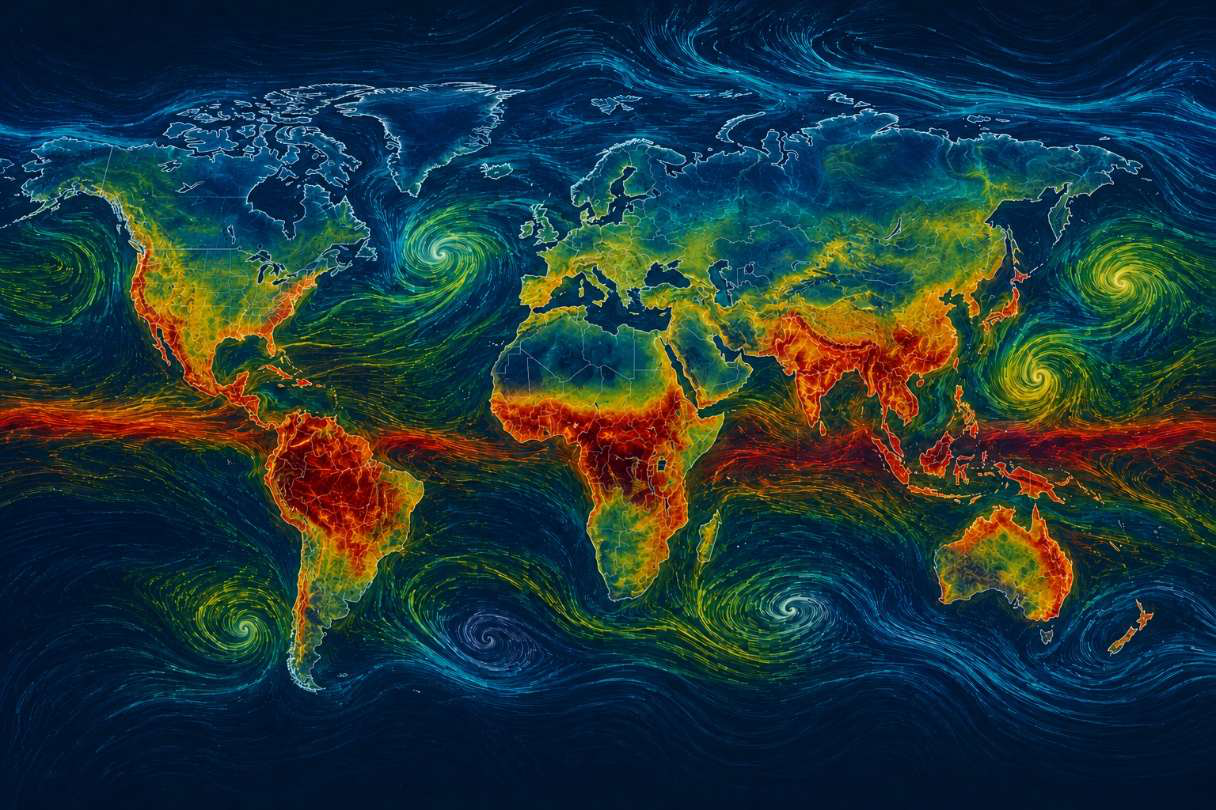
Figure 1: Global climate dynamics illustrating atmospheric circulation, ocean currents, and relative climate risk.
Conceptual framework by Cesar Perez; visualization generated with OpenAI.
Within this, there is an opportunity to establish a more integrated framework for bringing these disciplines together within the framework of Resilience Capitalism. It treats recovery not as a stage that begins after catastrophe, but as a continuous process of resilience creation before, during, and after disaster. Its central test is whether governance and capital allocation reduce future exposure, strengthen adaptive capacity, and distribute benefits equitably. Rather than discarding disaster capitalism, the framework extends it by showing how the same political and economic systems that shape post-disaster outcomes can be intentionally redesigned to anticipate risk and create long-term public value.
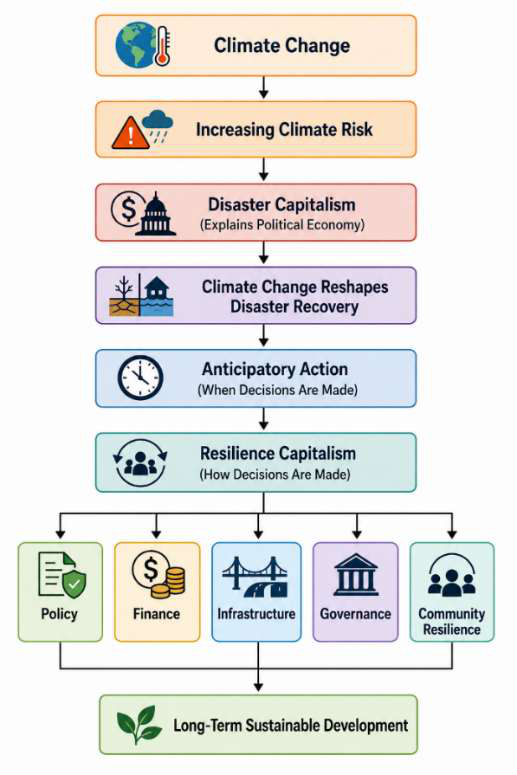
Figure 2: Progression from Disaster Capitalism to Resilience Capitalism across the disaster lifecycle
Conceptual framework by Cesar Perez; visualization generated with OpenAI.
Any effort to rethink recovery in this context should include Naomi Klein’s cautionary look at disaster capitalism. Klein challenged the assumption that disasters are purely humanitarian or natural events. She argued that crises can become political and economic turning points through which governments, corporations, and private interests reshape markets, institutions, and public policy while communities are coping with disruption. This reframing made clear that recovery is not politically or economically neutral.
Reconstruction decisions determine how resources are allocated, whose interests are prioritized, and which communities benefit. Choices about land use, infrastructure, public services, insurance, financing, and institutional reform can redistribute economic opportunity, political influence, and social vulnerability. Recovery is therefore more than an engineering exercise. It is a governance process shaped by competing priorities, financial constraints, institutional capacity, public trust, and unequal bargaining power.
Klein’s contribution remains essential because it directs attention toward accountability, equity, transparency, and the roles of public and private actors. Yet accelerating climate change raises a challenge beyond the original framework. Disaster capitalism primarily explains how actors respond to or capitalize on crises after they occur. Today, decision-makers must also determine how to anticipate hazards, reduce systemic risk, and direct investment toward resilience before disaster strikes. Governments, multilateral development banks, insurers, investors, and communities need a framework that connects the political economy of recovery with the economics of prevention.
The financial consequences of reactive recovery are visible in FEMA debris-removal spending. Figure 3 shows wide variation across disaster types and within the same category. The mean project cost substantially exceeds the median because a small number of catastrophic events create exceptionally large liabilities. One California wildfire project reached approximately US$2.1 billion. Debris removal is only an early component of recovery, preceding emergency services, temporary housing, infrastructure reconstruction, and long-term economic support. This demonstrates how rapidly public costs can escalate after homes, infrastructure, and communities have already been damaged.
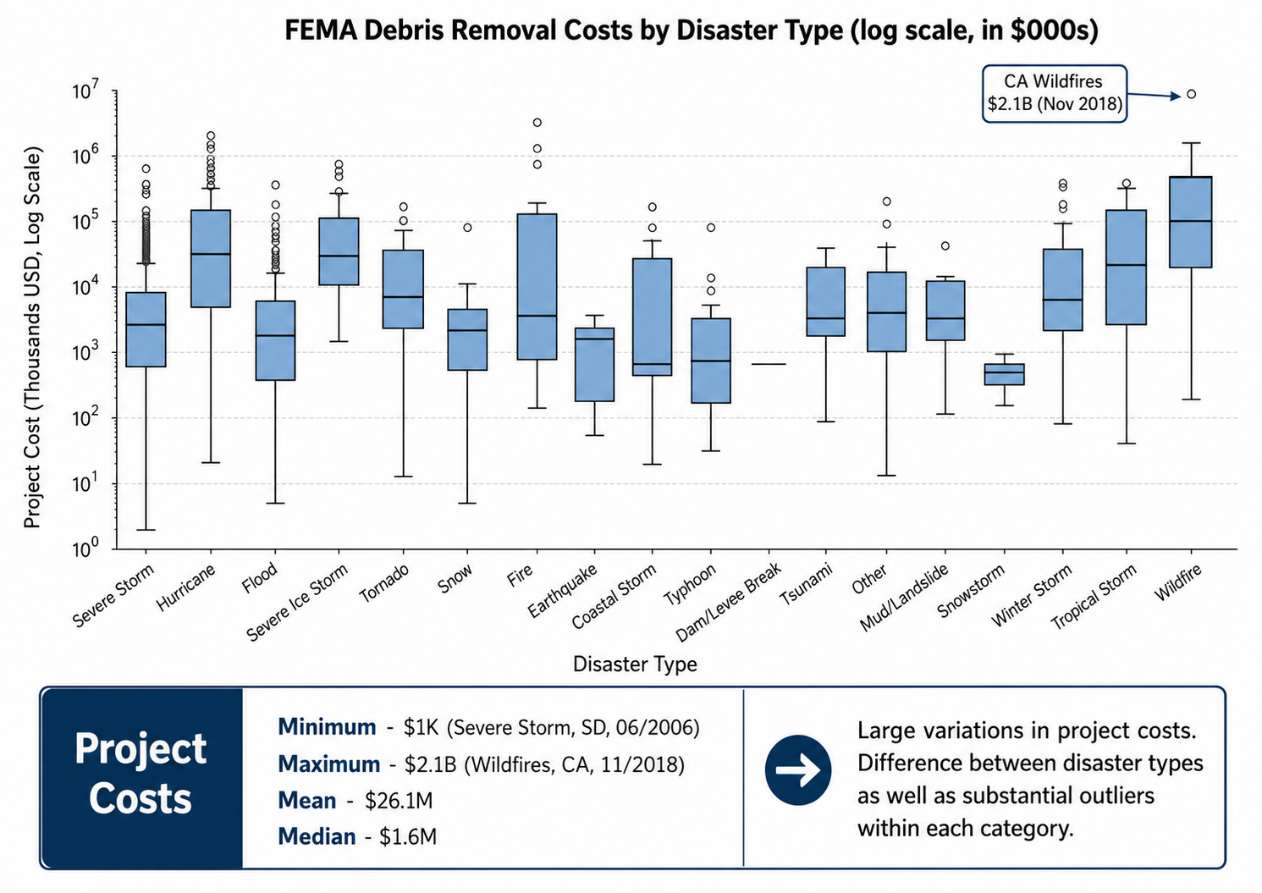
Figure 3: FEMA debris-removal costs by disaster type.
Figure created by Salome Dormoy, Ally Forstmann, Cesar Perez, and Benjamin Mothershead for “Predicting Debris Removal Costs for FEMA,” Columbia Climate School Quantitative Methods presentation, 1 May 2025. Data from: FEMA OpenFEMA Public Assistance Funded Projects Details v1 and Disaster Declarations Summaries v2. Costs are shown in thousands of inflation-adjusted 2024 U.S. dollars on a logarithmic scale.
The same reactive pattern appears globally. Munich Re estimated that natural disasters caused US$320 billion in losses in 2024, compared with inflation-adjusted averages of US$236 billion over ten years and US$181 billion over thirty years. Only US$140 billion of the 2024 total was insured, leaving an estimated US$180 billion protection gap. Weather catastrophes accounted for 93 percent of overall losses and 97 percent of insured losses. These figures show that disaster costs are not carried by insurers alone. Uninsured losses fall on households, businesses, governments, taxpayers, lenders, and communities, often with the greatest burden placed on those least able to absorb it.
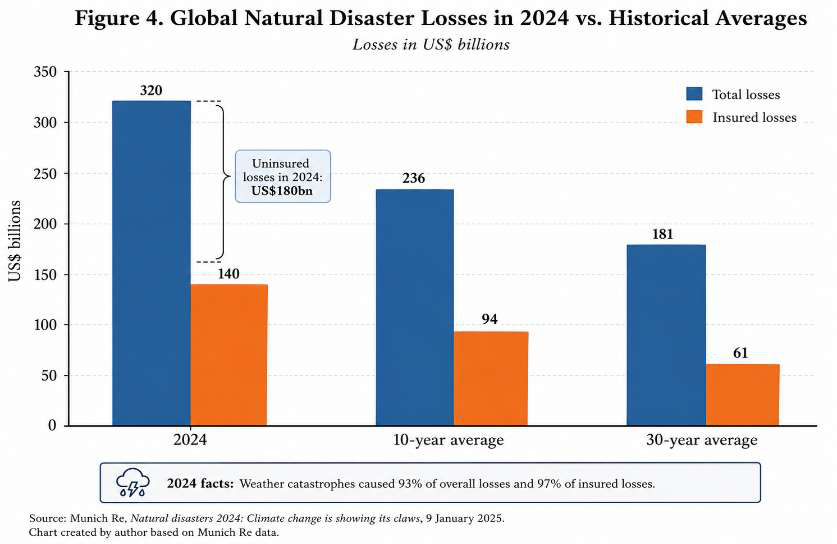
Figure 4: Global natural disaster losses in 2024 compared with historical averages
Source data: Munich Re, “Natural disasters 2024: Climate change is showing its claws,” 9 January 2025. Chart created by the author based on Munich Re data.
Together, Figures 3 and 4 reveal two dimensions of the same problem: post-disaster costs are highly volatile, and a large share remains socially distributed rather than insured. Resilience Capitalism responds by treating preventive investment as an economic strategy rather than an optional humanitarian supplement. Forecast-based financing, resilient infrastructure, building standards, ecosystem protection, risk-informed land use, and early-warning systems should be compared with the future losses they can avoid, not merely with their upfront costs.
Operationally, this requires moving money and authority earlier in the risk cycle. Governments and development institutions can establish forecast thresholds that automatically release funds, maintain prequalified suppliers, protect emergency social-assistance registries, and finance local preparedness before a warning becomes a catastrophe. Public procurement rules can reward lifecycle resilience rather than the lowest initial price, while infrastructure appraisals can include avoided disruption, continuity of essential services, and distributional impacts. These mechanisms also require safeguards. Early finance should be transparent, independently monitored, and designed with community participation so that anticipatory investment does not reproduce the inequities identified by disaster-capitalism scholarship. Prevention is not neutral; decisions about which places, assets, and populations receive protection remain political choices. Resilience Capitalism therefore joins financial innovation with accountability, ensuring that faster capital deployment strengthens public value rather than simply creating a new market around climate risk.
For governments, the framework calls for a shift from episodic disaster expenditure toward long-term resilience budgeting. Public projects should be evaluated not only by immediate reconstruction needs but also by whether they reduce exposure, strengthen preparedness, and avoid repeated losses. This requires linking development plans, capital budgets, insurance arrangements, emergency management, and climate adaptation rather than funding them as separate policy domains.
For multilateral development banks and financial institutions, Resilience Capitalism broadens investment appraisal. Climate risk, anticipatory action, governance quality, institutional capacity, distributional effects, and avoided losses should complement conventional measures of financial return. Blended finance, contingent credit, resilience bonds, insurance, and prearranged disaster finance can mobilize capital earlier, but their value depends on transparent rules and measurable benefits for exposed communities.
Private investors and insurers also influence resilience through asset valuation, underwriting, portfolio decisions, and infrastructure finance. Pricing risk can encourage prevention, but higher prices alone can deepen exclusion where households or municipalities cannot afford coverage. Effective resilience therefore requires public policy, risk sharing, and targeted support alongside market signals. Communities must remain central because local knowledge, trust, participation, and equity determine whether technically sound investments produce durable outcomes.
This approach reframes disaster recovery as a strategic investment in the future rather than a response to the past. It extends disaster capitalism’s political-economic insight by integrating prevention, anticipatory action, finance, infrastructure, governance, and community participation across the disaster lifecycle. The evidence here shows why that shift is urgent: reactive costs can reach billions, while large protection gaps leave households and taxpayers exposed. Future research should test the framework through measurable indicators and comparative case studies. The central question is no longer only how quickly societies rebuild, but whether today’s decisions reduce the losses, inequities, and vulnerabilities of the next disaster.
Data Sources and References:
Dormoy S, Forstmann A, Perez C, Mothershead B. Predicting Debris Removal Costs for FEMA. Columbia Climate School Quantitative Methods Group 6 presentation; 1 May 2025.
Federal Emergency Management Agency. OpenFEMA Public Assistance Funded Projects Details, Version 1. Washington, DC: U.S. Department of Homeland Security.
Federal Emergency Management Agency. OpenFEMA Disaster Declarations Summaries, Version 2. Washington, DC: U.S. Department of Homeland Security.
Intergovernmental Panel on Climate Change. Climate Change 2022: Impacts, Adaptation and Vulnerability. Cambridge: Cambridge University Press; 2022.
Klein N. The Shock Doctrine: The Rise of Disaster Capitalism. New York: Metropolitan Books; 2007.
Munich Re. Climate change is showing its claws: The world is getting hotter, resulting in severe hurricanes, thunderstorms and floods. Media information; 9 January 2025.
United Nations. Paris Agreement. Paris: United Nations Framework Convention on Climate Change; 2015.
United Nations Office for Disaster Risk Reduction. Sendai Framework for Disaster Risk Reduction 2015-2030. Geneva: United Nations; 2015.